
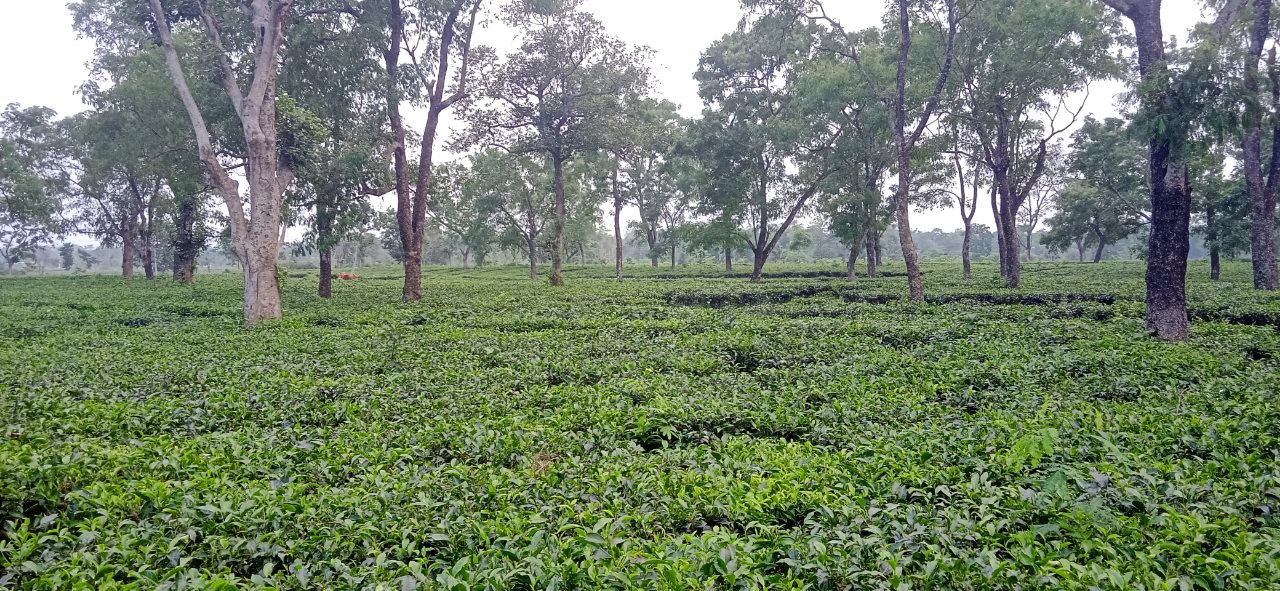
Nilgiri tea is a high-quality Indian tea grown in the Nilgiri Hills of Tamil Nadu, Karnataka and Kerala. Nilgiri tea, known for its smooth, fragrant, and brisk flavor, is often used in blends and iced teas. Nilgiri tea tastes special because it grows in mountains with dual monsoons and cool weather—nature’s recipe for awesome flavor.
History of Nilgiri Tea
Nilgiri tea is grown in the picturesque Nilgiri Mountains, part of the Western Ghats in northwestern Tamil Nadu, southern Karnataka, and eastern Kerala in South India. Tea was introduced to the region in 1835 by British officials seeking to reduce reliance on Chinese tea imports. George Samuel Perrottet was one of the first to try growing tea plants in this region. Thiashola estate opened in 1859 as one of the region’s first tea farms, though commercial production only began in 1862. The tea gained international recognition over time, and in 2008, Nilgiri tea received Geographical Indication (GI) status for its unique qualities.
Geography
The tea-growing regions of the Nilgiris are part of the Western Ghats, a UNESCO World Heritage Site. These mountains have rolling hills, plateaus, and valleys. The soil in the Nilgiri region is acidic and full of organic matter, which is good for growing tea. The vegetation of the Nilgiri region includes tropical evergreen forests, grasslands, and agricultural plantations.
Climate of the Nilgiris
The Nilgiris experience a subtropical highland climate (Cwb under Köppen classification).
- Temperature: Ranges from 5°C to 27°C annually.
- Rainfall: This region receives heavy annual rainfall (1,200–2,600 mm), mainly during the southwest monsoon and retreating northeast monsoon, resulting in two distinct rainy seasons. Despite this, its rolling hills, plateaus, and hanging valleys prevent waterlogging issues.
- Humidity stays high all year because of frequent mist and clouds.
- Humid winds from nearby oceans (Bay of Bengal and Arabian Sea) keep the Nilgiri Hills moist—perfect for growing tea.
Monsoons and Nilgiri Tea
Nilgiri tea owes its unique flavor to getting soaked by two monsoons every year – first the Southwest monsoon from June to September, then the Northeast monsoon from October to December – which keeps the soil perfectly moist for tea plants to thrive, though sometimes too much rain can delay harvests or weaken the leaves’ flavor; luckily, the region’s hilly terrain prevents flooding (unlike the flood-prone plains of Assam’s tea-growing region), and while El Niño brings drought that shrinks yields and La Niña causes excessive rains that slow picking, Nilgiri’s elevation helps balance these extremes to consistently produce that smooth, fragrant tea everyone loves.
Nilgiri Tea Harvesting Seasons
Nilgiri’s special weather lets farmers pick tea leaves all year, but the best stuff comes in two key seasons: From December to February (Winter Flush), the cold makes the plants grow slower, packing the leaves with intense flavor—this is when the fanciest teas are made. Then from June to September (Monsoon Flush), the heavy rains make the bushes grow super fast, so they produce way more leaves, but the taste is lighter—perfect for everyday tea bags. The rest of the year? Steady, good-quality picking keeps the supply coming!
Plant Varieties
The main tea plant grown in Nilgiri is Camellia sinensis, but growers also use other varieties like CR6017, TRF-4, and UPASI-3.
Tea-growing regions
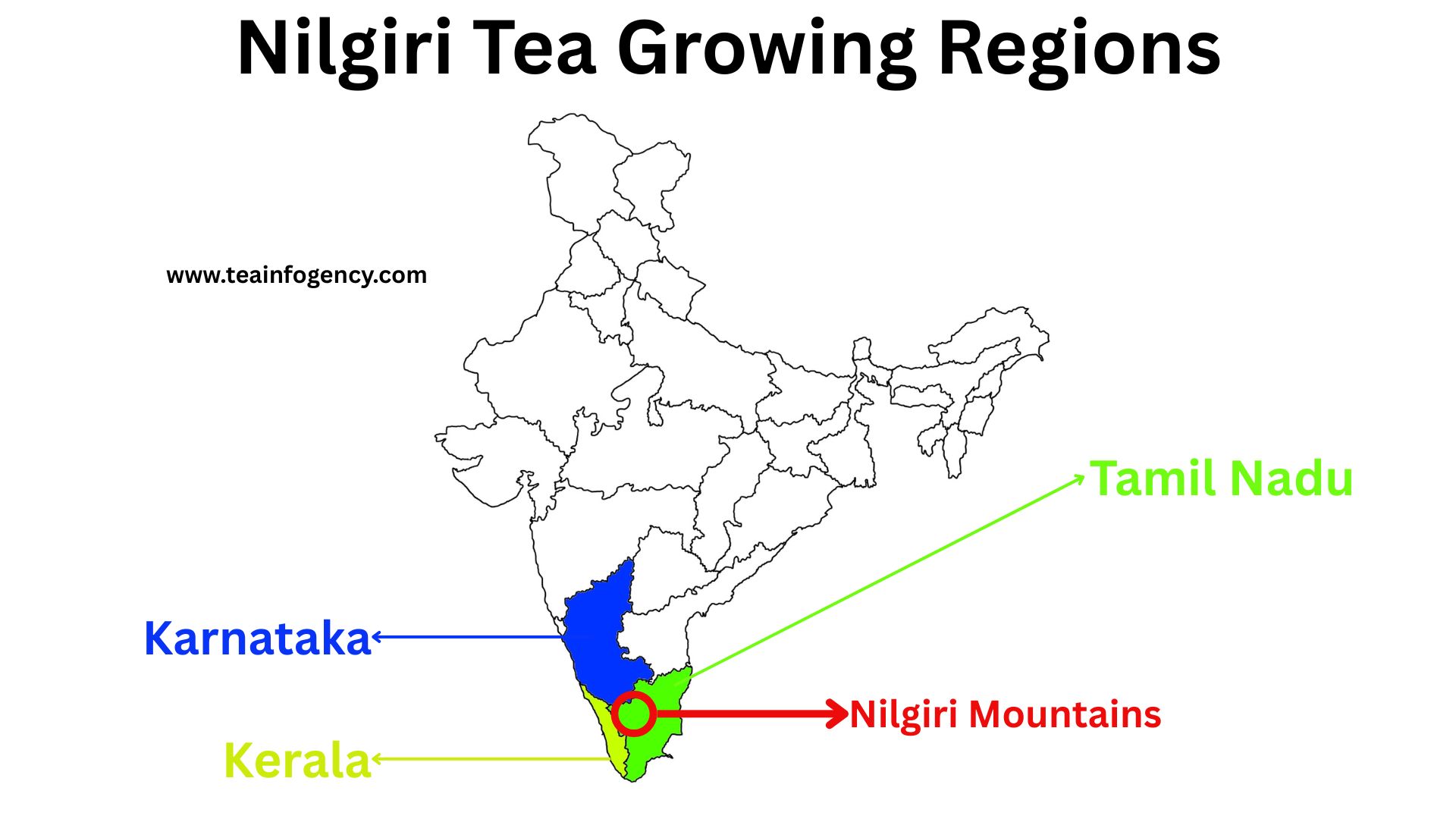
| Tamil nadu | Kerala | karnataka |
| Combatore, Nilgiri, Udhagamandalam (ooty), Coonoor, Kotagiri | Idduki, Wynnad, Kattayam, Malappuram, Trivandrum | Chikmagalur |
Varieties and Grades of Nilgiri Tea
- Varieties: Black tea (most common), green tea, white tea, and oolong tea are produced in the region. Black teas are particularly known for their briskness and floral notes.
- Grades: Includes both Nilgiri orthodox teas (whole-leaf) and CTC teas (crush-tear-curl), catering to diverse markets globally.
Conclusion
Nilgiri tea is Indian tea’s secret weapon—naturally smooth and floral (never bitter), with year-round harvests (no offseason breaks!). Now global tea lovers are discovering what locals always knew: this ‘blue mountain’ brew from South India might just be nature’s most perfect drink.

I’m Kanka Adhikary, a small tea grower from the picturesque Dooars region of India. With deep roots in tea cultivation, I share real-life experiences, traditions, and stories that reflect tea’s journey from leaf to cup.
I also hold a B.Sc. degree in Medical Physiology. Through this blog, I aim to bring you closer to the world of tea—its culture, craftsmanship, and the everyday life of those who grow it.