
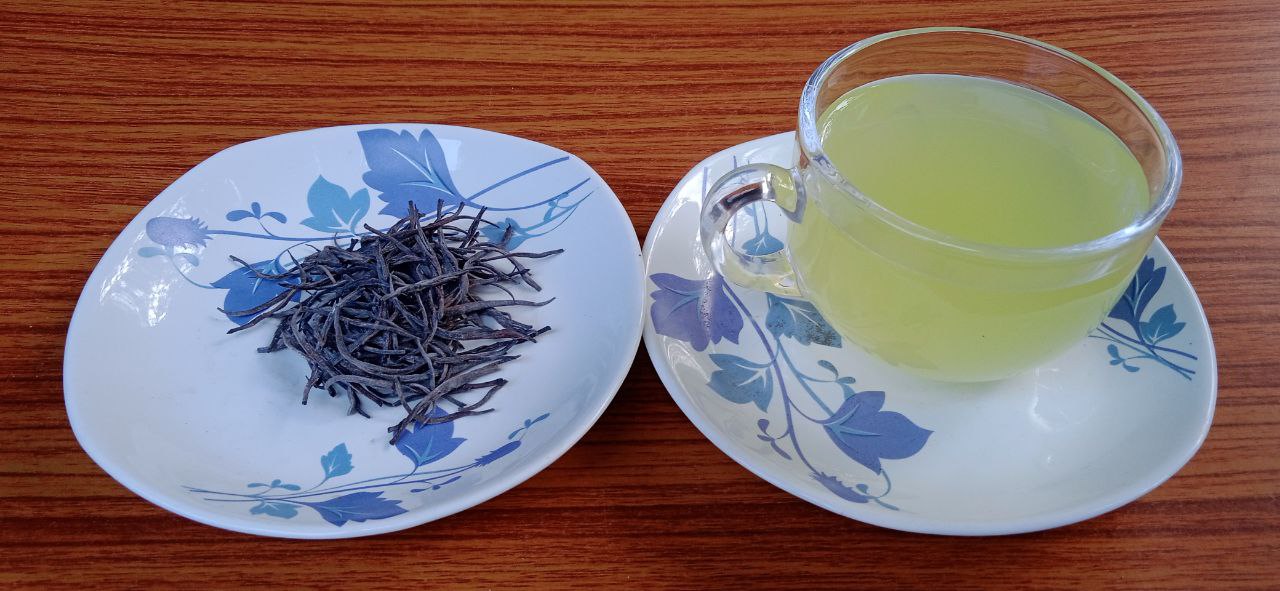
White tea is a kind of tea that comes from the young leaves and buds of a plant called Camellia sinensis, and it started in Fujian, China. It’s called white tea because the buds have tiny white hairs on them. White tea is the least processed of all teas, so it keeps more of its natural stuff, like antioxidants. Because of this, the taste is much lighter and simpler compared to stronger teas like black tea. Some people drink it for its health benefits, while others just enjoy how mild it tastes. You don’t have to be a tea expert to try it—it is something anyone can drink if they want to see what a mild and natural tea is like.
From Garden to Your Cup: White Tea Processing Steps
Making white tea is a simple process, but it requires careful technique to get the best results.
- Plucking: In early spring, only the youngest buds or the young leaves with buds are picked, instead of taking all the leaves at once.
Withering: The picked leaves are then left in the sun or indoors to lose moisture and become soft for the next step. - Minimal Oxidation: What makes white tea different from other types is that it goes through very little oxidation. Black tea oxidizes completely, and green tea stops oxidizing when heated—but white tea only oxidizes a little as it dries. The leaves slowly react with oxygen, changing their chemistry just enough to create a unique taste. Unlike black tea, this process isn’t sped up on purpose—it happens naturally as the leaves dry over a long period during the withering process. That’s why white tea stays closest to its original state, keeping most of what’s in the fresh leaf while still gaining a little extra flavor.
- Drying: Leaves are dried using warm air or in low-heat ovens to stop oxidation.
- Sorting & Grading: After drying, the leaves are sorted by size, shape, and overall quality.
- Packing: Then they are sealed properly to keep them fresh and hold on to their natural smell.
Unlike black and green tea, white tea doesn’t go through rolling or pan-firing, which helps it keep its soft feel and light aroma.
Aroma and Taste Profile
The smell is clean and quiet, with just a touch of plants or wood. It doesn’t hit you hard with flavor, which is why people who like quiet, clean tastes usually pick this one. The exact flavors change a bit depending on which white tea you get. White tea tastes light and natural – like flowers, honey, or sometimes fruit and fresh grass.
Types and Varieties of White Tea
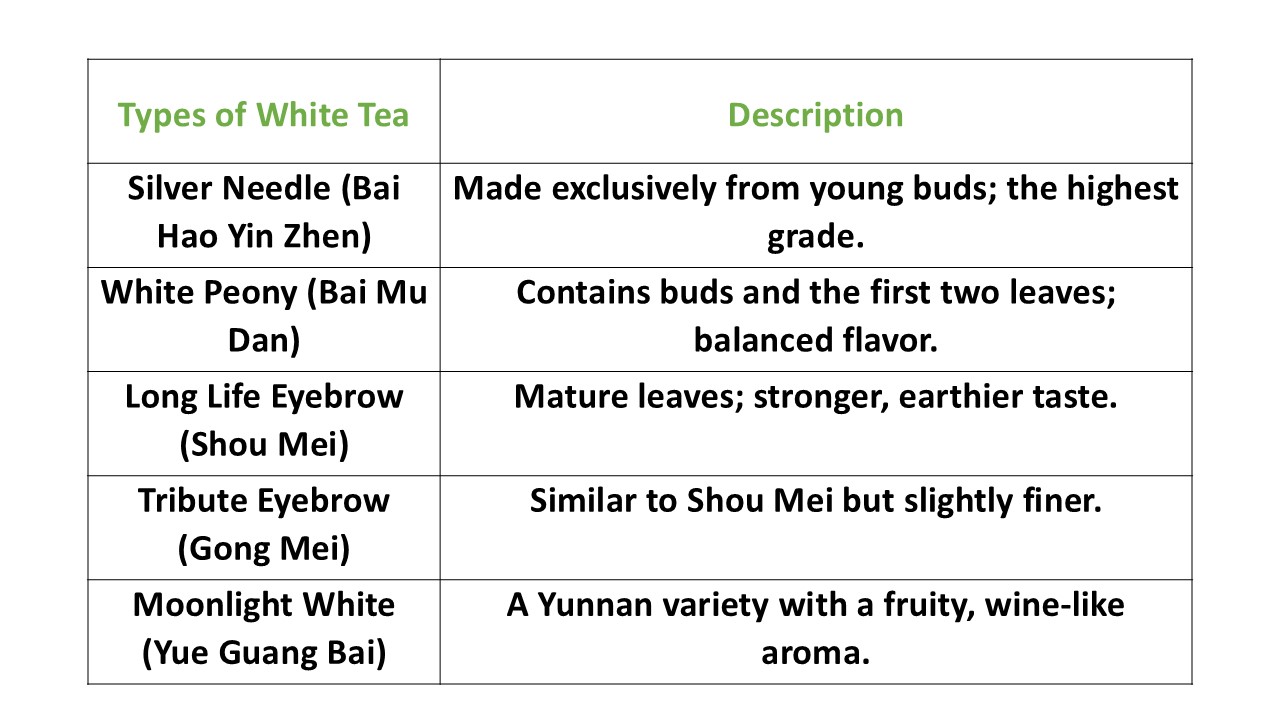
- Silver Needle (Bai Hao Yin Zhen)
- White Peony (Bai Mu Dan)
- Long Life Eyebrow (Shou Mei)
- Tribute Eyebrow (Gong Mei)
- Moonlight White (Yue Guang Bai)
Darjeeling White Tea
India’s Darjeeling region – famous for its black teas – also makes a small amount of really good white tea. They use Chinese-style processing but with local plants and the special growing conditions of the Himalayas. What you get is a white tea with Darjeeling’s signature muscatel (grape-like) flavor, but lighter and fresher than their black teas. Made from spring leaves, it tastes floral with hints of fruit and sometimes a touch of spice – totally different from both Chinese white teas and regular Darjeeling blacks.
Chemical Composition
White tea keeps more of its natural chemicals because it doesn’t get processed much. Scientists found it’s packed with good stuff like polyphenols (including catechins and flavonols) that make it taste good and might be healthy. Since white tea isn’t oxidized like black tea, it keeps more of these compounds.
Here’s what’s in it and why it matters:
- Catechins (especially EGCG): Fight cell damage
- Polyphenols: Reduce swelling and might slow aging
- Theanine: Helps you relax but stay awake
- Caffeine: More than herbal tea, less than black tea
- Flavonoids: Good for your heart
- Essential oils: Make it smell nice and fight germs a little
Health Benefits of White Tea
- Rich in Antioxidants – Helps reduce free radical damage.
- Supports Skin Health – Protects collagen and may slow aging.
- Heart Health – May reduce cholesterol and improve arterial function.
- Weight Management – Slightly boosts metabolism.
- Oral Hygiene – Contains fluoride and catechins that support dental health.
- Immune Support – Antimicrobial properties help fight infections.
- Anti-Cancer Potential – Early studies suggest EGCG may inhibit cancer cell growth.
Medical Disclaimer: This article is for informational purposes only and not medical advice. Consult a healthcare professional before making dietary changes.
Preparation and Brewing Guide
- Water Temperature: 160–185°F (70–85°C) – Avoid boiling water to prevent bitterness.
- Steeping Time: 2–5 minutes (longer for stronger flavor).
- Tea-to-Water Ratio: 1–2 tsp per 350 ml cup.
- Best Brewing Vessel: Glass or porcelain to appreciate its pale golden liquor.
Can You Drink White Tea with Milk and Sugar?
Traditionally, white tea is enjoyed pure to appreciate its delicate flavors. However:
- Milk – Not recommended, as it overpowers the subtle taste.
- Sugar/Honey – A small amount can enhance natural sweetness if desired.
- Lemon/Iced White Tea – Refreshing alternatives for summer.
Buying Guide: How to Choose the Best White Tea
- Look for Whole Leaves & Buds – Avoid broken leaves or dust.
- Check Origin – Darjeeling, Assam, Nilgiri, and Fujian, China, are considered the gold standards.
- Aroma – Should be fresh, floral, and not musty.
- Packaging – Air-tight, light-resistant containers preserve freshness.
- Organic Certification – Ensures no pesticides.
Conclusion
White tea is a treasure in the world of tea, offering purity, elegance, and wellness in every sip. Whether you seek a gentle caffeine boost, a moment of tranquility, or a healthful beverage, white tea is a perfect choice. Explore its varieties, brew it mindfully, and savor its delicate charm.

I’m Kanka Adhikary, a small tea grower from the picturesque Dooars region of India. With deep roots in tea cultivation, I share real-life experiences, traditions, and stories that reflect tea’s journey from leaf to cup.
I also hold a B.Sc. degree in Medical Physiology. Through this blog, I aim to bring you closer to the world of tea—its culture, craftsmanship, and the everyday life of those who grow it.