
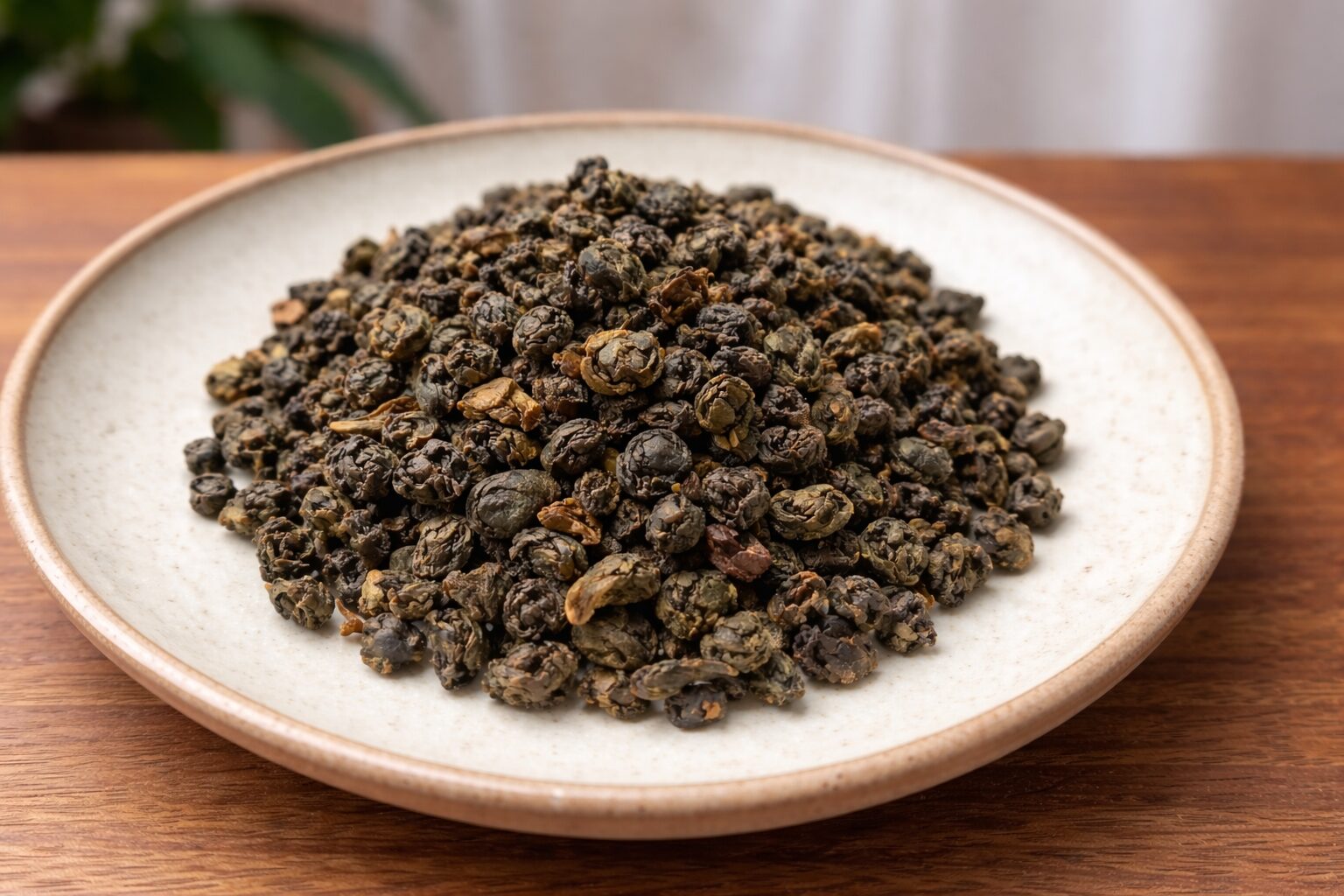
Oolong tea, an old Chinese tea, is known for having flavors and smells that fall between green and black tea because of the way it’s partly oxidized, and depending on how it’s made, it can taste light or strong, giving people different kinds of tea to try.
From Garden to Cup: The Processing of Oolong Tea
The production of oolong tea follows several steps that affect how it tastes and smells:
- Plucking :- Fresh tea leaves, usually from the Camellia sinensis plant, are picked by hand, mostly choosing the top two leaves and a bud for better quality.
- Withering :- Leaves are spread out to dry, either in sunlight or indoors, letting them lose moisture and soften up.
- Bruising (Shaking & Tumbling) :- The leaves get shaken or rolled to break open their cells, which gets oxidation started.
- Oxidation :-The tea’s flavor depends on how much it oxidizes- light oolongs only do it a little, while dark ones go way further.
- Firing (Kill-Green):- Heat is applied to stop oxidation and keep the flavor.
- Rolling & Shaping:- The leaves are rolled into tight balls or twisted strands.
- Drying :- Final drying makes the tea stable for storage.
- Roasting (Optional) :- Some oolongs are roasted for a deeper, nuttier taste.
Types and Varieties
| Region | Variety | Description |
| Fujian Varieties | Wuyi Mountain Oolongs | Well-known and costly teas, often made using natural methods. |
| Da Hong Pao | A well-known tea from China, highly valued. | |
| Shui Jin Gui | Another important tea from the Wuyi Mountains. | |
| Tieluohan | A tea with unique features from the Wuyi Mountains. | |
| Bai Jiguan | A lighter tea with pale yellow leaves. | |
| Rougui | A dark tea with a spicy smell. | |
| Shui Xian | A very dark tea that is grown in Fujian, China. | |
| Anxi Oolongs | Tieguanyin | Famous tea known for its orchid smell and complex taste. |
| Huangjin Gui | Similar to Tieguanyin but has a unique fragrance. | |
| Taiwanese Varieties | Dong Ding Oolong | Tea named after a mountain with tightly rolled leaves and a light fragrance. |
| Dongfang Meiren | Known for its strong aroma, thanks to the Jassid insect. | |
| Alishan Oolong | Grown at high elevations with a fruity aroma and purple-green leaves. | |
| Lishan Oolong | Grown even higher than Alishan, with its own special features. | |
| Baozhong | The least processed Taiwanese tea, with light green to brown leaves. | |
| Jin Xuan | Known as “Milk Oolong” for its creamy taste, though it doesn’t contain milk. | |
| High-mountain (Gaoshan) | Includes varieties grown in Taiwan’s central mountains like Alishan, Wu She, and Li Shan. |
Chemical Composition
| Component | Description / Function |
| Volatile Compounds | Includes terpenoid, amino acid, fatty acid, and carotenoid-derived compounds; give oolong its aroma |
| Polyphenols | Antioxidants like catechins; partly oxidized, affecting taste and health benefits |
| Caffeine | Present in moderate amounts; provides a mild energy boost |
| Amino Acids | Especially L-theanine, which adds umami flavor and may help relaxation |
| Minerals | Includes potassium, manganese, and fluoride; supports general health |
| Vitamins | Small amounts of B vitamins; support metabolic functions |
India and Oolong Tea
India is famous for its black teas, especially from Assam and Darjeeling, and some green teas, but it hasn’t been a big player in oolong production. Recently, tea estates in Darjeeling and the Nilgiris have started trying to make oolong tea using methods from China and Taiwan, adapting them to local tea plants. Indian oolongs mix the local environment with traditional processing, making them different from the Chinese and Taiwanese ones. These teas often have muscatel flavors (like Darjeeling tea) combined with the oxidation levels typical of oolong. Some areas in northeastern India, like Arunachal Pradesh and Sikkim, close to China, seem good for growing oolong, though production is still small compared to black teas. As more people want specialty teas, India’s efforts to make oolong are growing and changing.
Aroma and Taste
Oolong tea’s aroma can range from floral and fruity to nutty and toasty, depending on how much it’s oxidized and roasted. In terms of taste, it offers a variety of experiences: lightly oxidized oolongs are floral, creamy, and sweet, like green tea, while heavily oxidized ones are bold, roasted, and complex, similar to black tea. Oolong is unique because each time you steep it, it changes, giving you different flavors and depth.
Preparation and Brewing
- Water Temperature: 80°C–90°C.
- Steeping Time: 3–5 minutes (adjust for taste).
- Gongfu Method: Multiple short infusions (5–30 sec) bring out more flavor.
Can You Drink Oolong Tea with Milk and Sugar?
Normally, people drink oolong tea without adding anything so they can taste the tea’s natural flavor. But some darker oolongs can handle milk and sugar, just like black tea.
Conclusion
Oolong tea is a neat kind of tea with a bunch of different flavors, some health benefits, and a strong tie to certain cultures. Whether you know a ton about tea or you’re just getting started, trying oolong can be a cool and worthwhile thing to do.
Click to Read More
| Tea Name | Read More |
| Oolong Tea | Read more |

I’m Kanka Adhikary, a small tea grower from the picturesque Dooars region of India. With deep roots in tea cultivation, I share real-life experiences, traditions, and stories that reflect tea’s journey from leaf to cup.
I also hold a B.Sc. degree in Medical Physiology. Through this blog, I aim to bring you closer to the world of tea—its culture, craftsmanship, and the everyday life of those who grow it.