
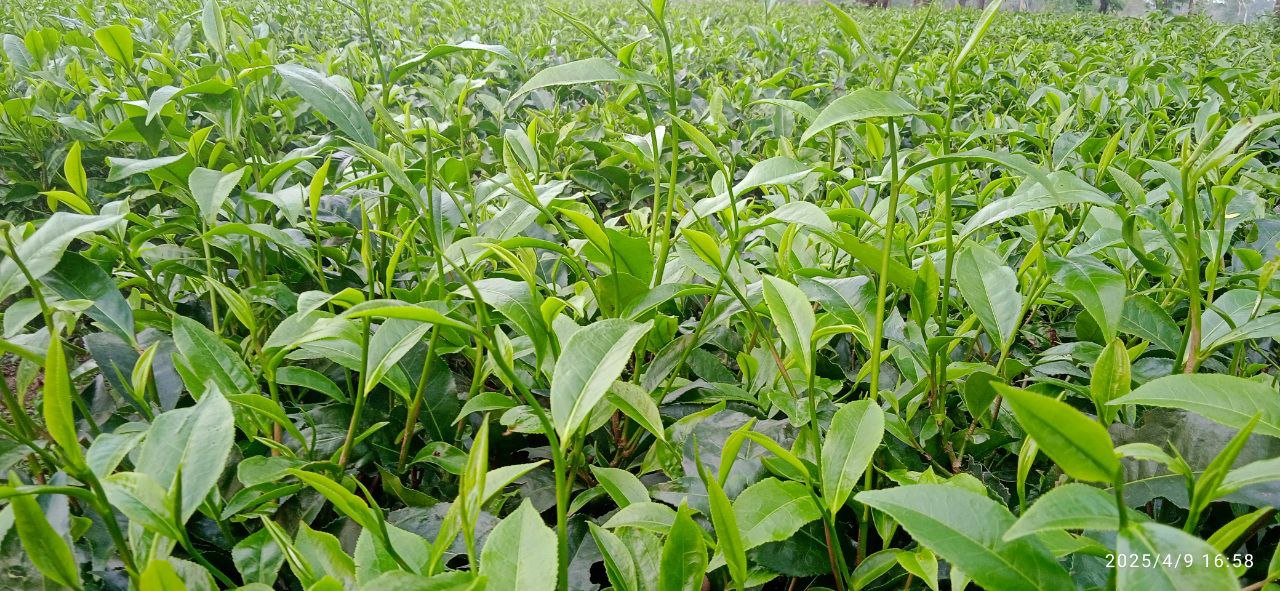
You know how some things are just different? Not better or worse, but unique—like how a perfectly aged wine stands apart from grape juice. Darjeeling tea is grown in the Himalayan foothills, and it’s not like regular tea. People who really know about tea often call it the “champagne of teas” because its taste is light, has many layers, and can’t be copied in other places. There are specific reasons why it turns out this way, and it has a lot to do with where and how it is grown.
History of Darjeeling Tea
In the 1800s, the British wanted to grow tea outside of China. They brought Chinese tea plants to Darjeeling, a mountainous region in India. Dr. Archibald Campbell planted the first tea bushes there in 1841. By 1856, large-scale tea plantations were established, and Darjeeling tea quickly gained global recognition for its unique flavor.
Where Darjeeling Is & Why It’s Perfect for Tea
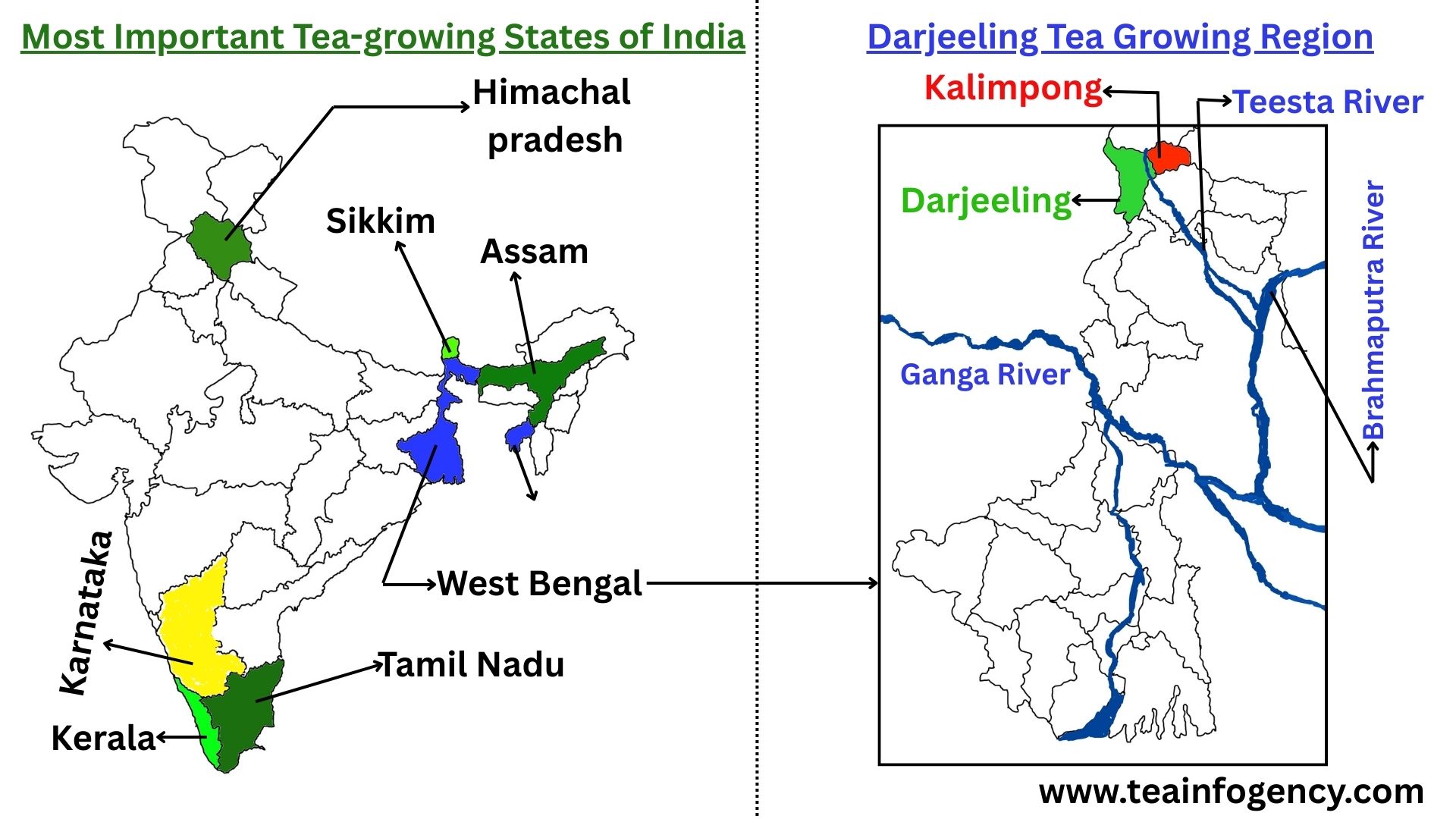
Darjeeling (West Bengal, India) sits in the Himalayan foothills—steep terrain with soil rich in organic matter. The elevation ranges from 150 to 2,100 meters above sea level.
Climate Profile:
- Temperature ranges from 1°C (winter) to 20°C (summer).
- Rain: Gets a lot—like 1,700 to 2,500 mm every year.
- Humidity: Always moist (like a sponge that never dries).
Köppen Climate Type:
As per the Köppen classification, Darjeeling falls under Cwb type climate (which means temperate highland climate with dry winters—perfect for tea).
Monsoon, El Niño & La Niña—The Tea Drama
- Monsoon (June-Sept): Rain floods the fields, making harvesting hard. Too much rain = weaker flavor. But after the rain, the tea gets better.
- El Niño: Less rain = fewer leaves, but stronger taste.
- La Niña: More rain = more tea, but milder flavor.
Darjeeling Tea Plant Varieties
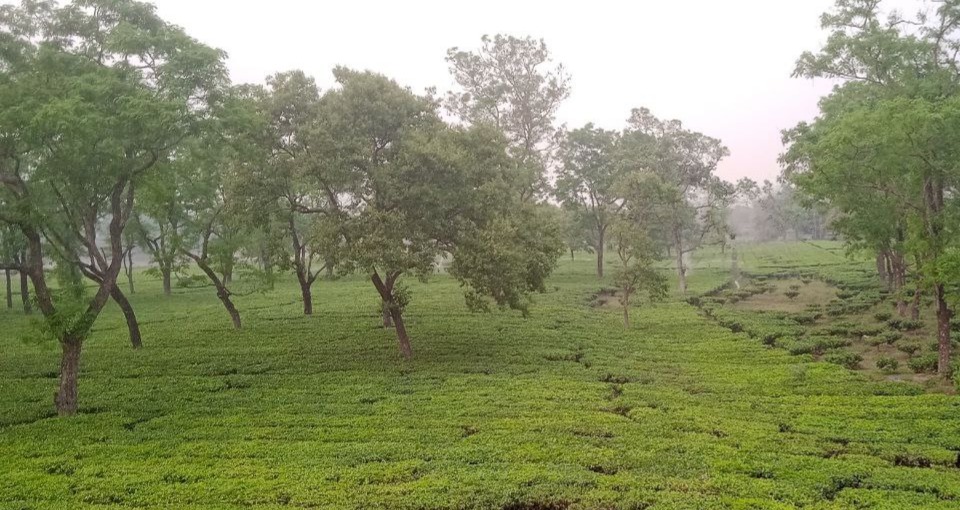
Most Indian teas come from big-leaf bushes (Camellia sinensis var. assamica). But Darjeeling grows a special small-leaf type (Camellia sinensis var. sinensis) that gives more flavor. The best varieties include:
- AV 2 (Balai) – Famous for that muscatel (fruity-wine) taste.
- Phoobsering 312 – Grows well in Darjeeling’s weather.
- Bannockburn 157 & Bennockburn 668 – Super aromatic.
- Teestavally 1 & TS 569 – Tough plants, good for all seasons.
Darjeeling Tea Harvesting Seasons
- First Flush (March-April) – Light, flowery, like spring in a cup.
- Second Flush (May-June) – The best—fruity, muscatel flavor.
- Autumn Flush (Oct-Nov) – Darker, stronger, like tea’s older brother.
Major Darjeeling Tea Growing Areas
- Darjeeling
- Kalimpong
- Kurseong
Business & Transport: How the Tea Gets to You
- Siliguri & Kolkata – Big trading spots.
- New Jalpaiguri (NJP) Railway – Main train station.
- Bagdogra International Airport (IXB): Located 80 km from Darjeeling town.
Benefits of Drinking Darjeeling Tea
- Full of antioxidants (Contains high levels of polyphenols, which help combat cell damage from free radicals.).
- Good for heart & cholesterol (Drinking Darjeeling tea regularly may lower bad cholesterol and improve blood flow due to its flavonoids).
- Helps digestion (Darjeeling tea contains natural tannins that help support healthy digestion).
- Gentle caffeine boost (Darjeeling tea has moderate caffeine that won’t give you a crash like coffee).
Medical Disclaimer: This article is for informational purposes only and not medical advice. Consult a healthcare professional before making dietary changes.
Conclusion
Darjeeling tea isn’t just a drink—it’s a mix of perfect weather, cool geography, and years of skill. It’s like the Michael Jordan of teas. And now you know why!
FAQs
Q. What Makes Darjeeling Tea Unique?
Ans: Darjeeling tea is unique because it grows only in the Himalayas, where high altitude, cool mist, and mineral-rich acidic soil create its natural fruity flavor.
Q. What Are the Different Grades of Darjeeling Tea?
Ans: Darjeeling tea leaves are graded primarily by leaf size and wholeness, categorized into: whole leaf (SFTGFOP, FTGFOP, TGFOP), broken leaf (FTGBOP, TGBOP, FBOP, BOP), and fannings/dust.
Q. Why is Darjeeling tea so expensive compared to other teas?
Ans: Darjeeling tea is grown only in high mountains, picked by hand, and comes from a special place protected by law, so it’s rare and always costs more no matter what.
Q. How long can I store Darjeeling tea to keep it fresh?
Ans: If you keep Darjeeling tea in an airtight container away from light, heat, and moisture, it can stay fresh for about a year without losing its awesome flavor.
Q. Why Does Darjeeling Tea Have a GI (Geographical Indication) Tag?
Ans: Darjeeling tea got India’s first GI tag in 2004 because its special mountain-grown flavor can’t be copied, and the tag legally protects it from fakes – only tea from Darjeeling district can use the name.
Q. How is Authentic Darjeeling Tea Protected in Global Markets?
Ans: Authentic Darjeeling Tea is protected in global markets through international certification trademarks, geographical indication registrations, and copyright laws, preventing unauthorized use, imitation, or false claims of its name and logo worldwide.

I’m Kanka Adhikary, a small tea grower from the picturesque Dooars region of India. With deep roots in tea cultivation, I share real-life experiences, traditions, and stories that reflect tea’s journey from leaf to cup.
I also hold a B.Sc. degree in Medical Physiology. Through this blog, I aim to bring you closer to the world of tea—its culture, craftsmanship, and the everyday life of those who grow it.