
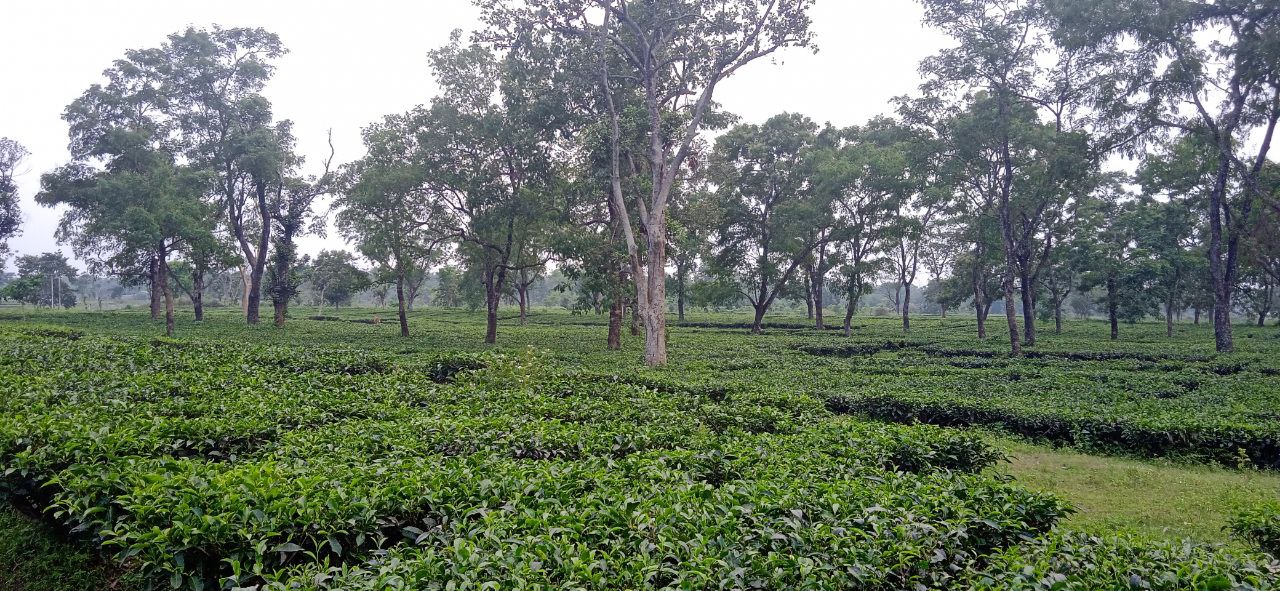
Terai-Dooars is one of India’s biggest tea-growing areas, especially for strong, full-bodied CTC tea (which stands for Crush, Tear, Curl—the method used to process it). It’s located where the Himalayas start leveling out, and the combination of soil, rainfall, and temperature here makes it ideal for tea. In this article, we will look at how Terai-Dooars became a key tea region, what its geography and climate do for tea growth, and what sets its tea apart from others.
History of Terai-Dooars Tea
The British were already growing tea in Assam and Darjeeling when they discovered Terai-Dooars in the late 1800s. Turns out this area was perfect for tea—the soil was rich, the weather just right, and the plants thrived. Within a few years, they’d turned it into one of India’s biggest tea regions. Today, it produces massive amounts of strong tea every year.
Teesta River and Lower Brahmaputra Basin
The Teesta River begins in Sikkim, cuts through mountains, and eventually merges with the Brahmaputra in Bangladesh. Along the way, it feeds the Lower Brahmaputra Basin—including the Dooars region—where its water and silt create perfect growing conditions, especially for tea. Without teesta river, the land would not be nearly as productive.
What is Terai and Dooars?
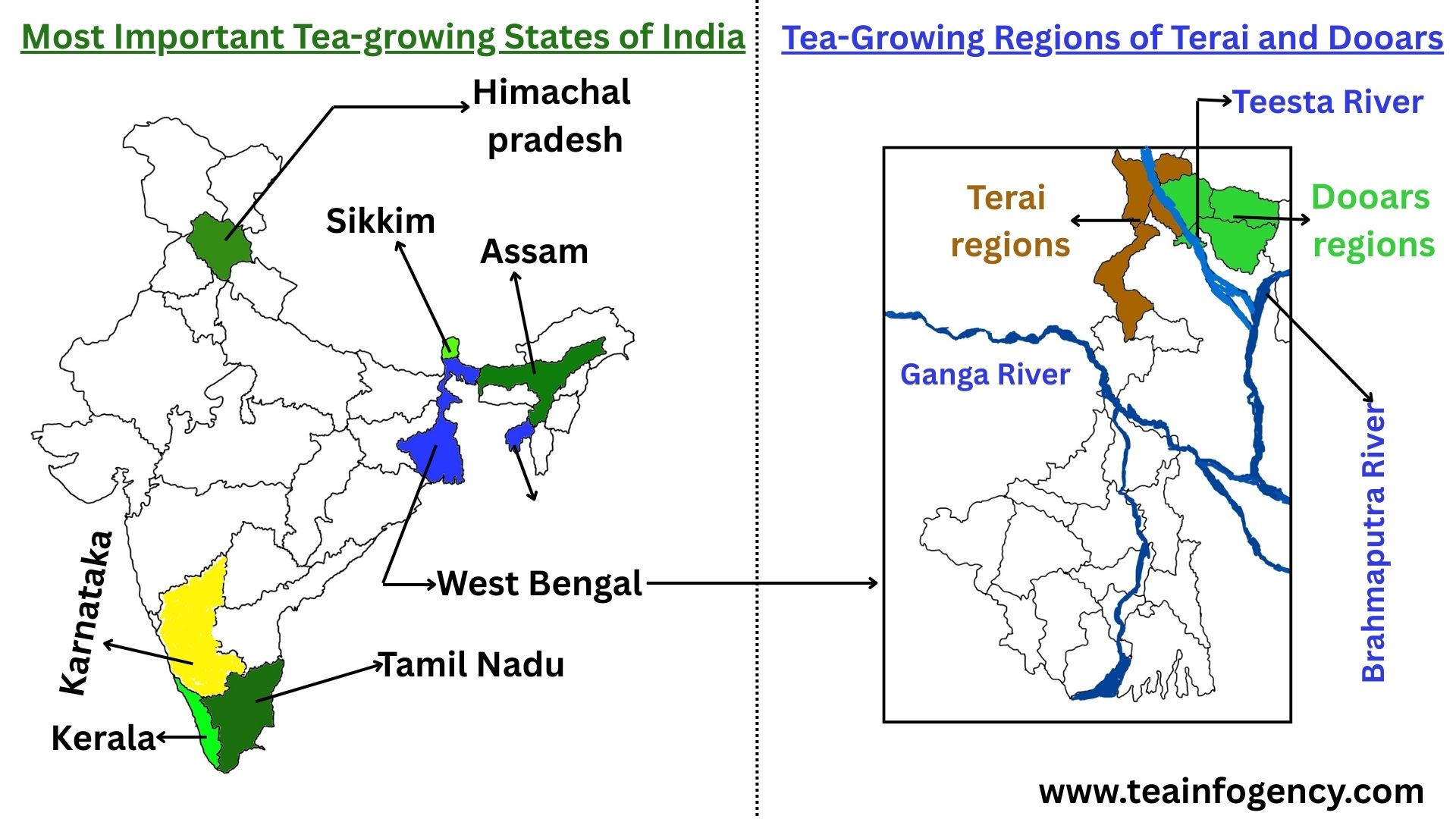
The Teesta River splits northern Bengal into two distinct zones.
- West of the Teesta River lies the Terai—a fertile, forested lowland covering areas like Darjeeling plains and North Dinajpur.
- East of the Teesta River is the Dooars, named after “doors” because it acts as a gateway to Bhutan and Northeast India; this region, spanning Alipurduar, Cooch Behar, and Jalpaiguri, mixes floodplains and foothills teeming with wildlife.
Together, the Terai and Dooars create a massive tea-growing belt that stretches into Assam.
Climate of Terai-Dooars
- Köppen Climate Classification: Humid Subtropical (Cwa).
- Temperature:
- Summer (March-June): 25°C – 35°C
- Winter (November-February): 8°C – 20°C
- Rainfall: 3000-4000 mm annually (heavy during monsoon).
- Humidity: High (70-90%), beneficial for tea bushes.
- Wind: Moderate breeze from the Himalayas.
Monsoon Impact on Tea
- Heavy rains (June-September) boost growth but can cause waterlogging.
- Excess rain may lead to pest attacks and lower-quality leaves.
El Niño & La Niña Effects
- El Niño: Causes drought, reducing yield and quality.
- La Niña: Brings excessive rain, increasing disease risk.
Nearby Railway Stations
- New Jalpaiguri (NJP)
- New Mal Junction
- Alipurduar Junction
- Hasimara
- Siliguri Junction
- New coochbehar
These stations connect tea-growing areas with Kolkata, Guwahati, and other big cities.
Important Business Centers
- Siliguri – Main trading hub
- Jalpaiguri
- Alipurduar and Cooch Behar
Nearest Airports
- Bagdogra Airport (IXB) – Near Siliguri, major airport for tea export and travel.
- Cooch Behar Airport – Small domestic airport.
Varieties of Terai-Dooars Tea
- CTC (Crush, Tear, Curl) – Most common, used in tea bags and milk tea
- Orthodox Tea – Less common, hand-processed, used in export
Grades of Terai-Dooars Tea
- BP (Broken Pekoe)
- BOP (Broken Orange Pekoe)
- BOPSM (Broken Orange Pekoe Small)
- PD (Pekoe Dust)
These grades decide the strength and price of the tea. There are many more varieties and grades produced to meet the demands of exporters and business firms.
Tea Plant Variety
The main type of tea plant grown here is called Camellia sinensis, which does well in warm and humid weather.
- In the Dooars region, farmers grow different varieties like TV1, TV17, S3A3, Teenali 17, Panitola 126, TV14, TV16, TTRI 1, TRA/DP36, TV35, TS 491, TS 589, TSS1, and TRA HK2214.
- In the Terai region, they use almost the same ones, including TV1, TV17, S3A3, Teenali 17, TV14, TV16, TTRI 1, TRA/DP36, along with a few others like TRA/SNT 8 and TRA/SNT 10.
These varieties are chosen based on how well they grow in local conditions and how much good quality tea they can produce.
Tea-Growing Districts of Terai-Dooars
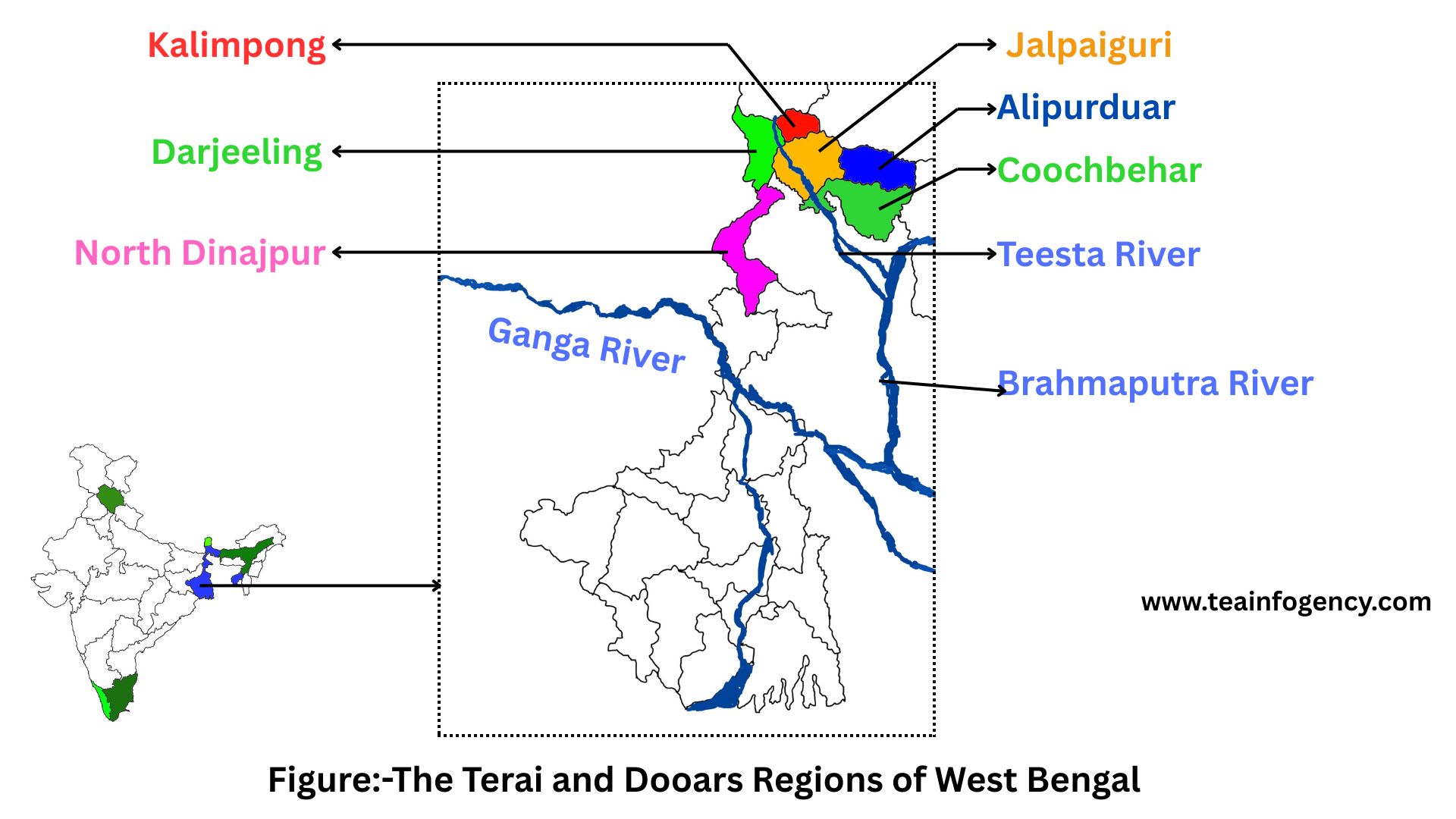
- Jalpaiguri (dooars)
- Alipurduar (dooars)
- Cooch Behar (dooars)
- Darjeeling (Terai part only)
- North Dinajpur (Terai)
These districts have hundreds of tea gardens employing thousands of workers.
Conclusion
Terai-Dooars tea is an important part of India’s tea industry, known for its robust flavor and high yield. The region’s unique geography, climate, and fertile soil contribute to its distinct taste. Whether you prefer a strong morning brew or a lighter afternoon cup, Terai-Dooars tea has something for every tea lover.

I’m Kanka Adhikary, a small tea grower from the picturesque Dooars region of India. With deep roots in tea cultivation, I share real-life experiences, traditions, and stories that reflect tea’s journey from leaf to cup.
I also hold a B.Sc. degree in Medical Physiology. Through this blog, I aim to bring you closer to the world of tea—its culture, craftsmanship, and the everyday life of those who grow it.