
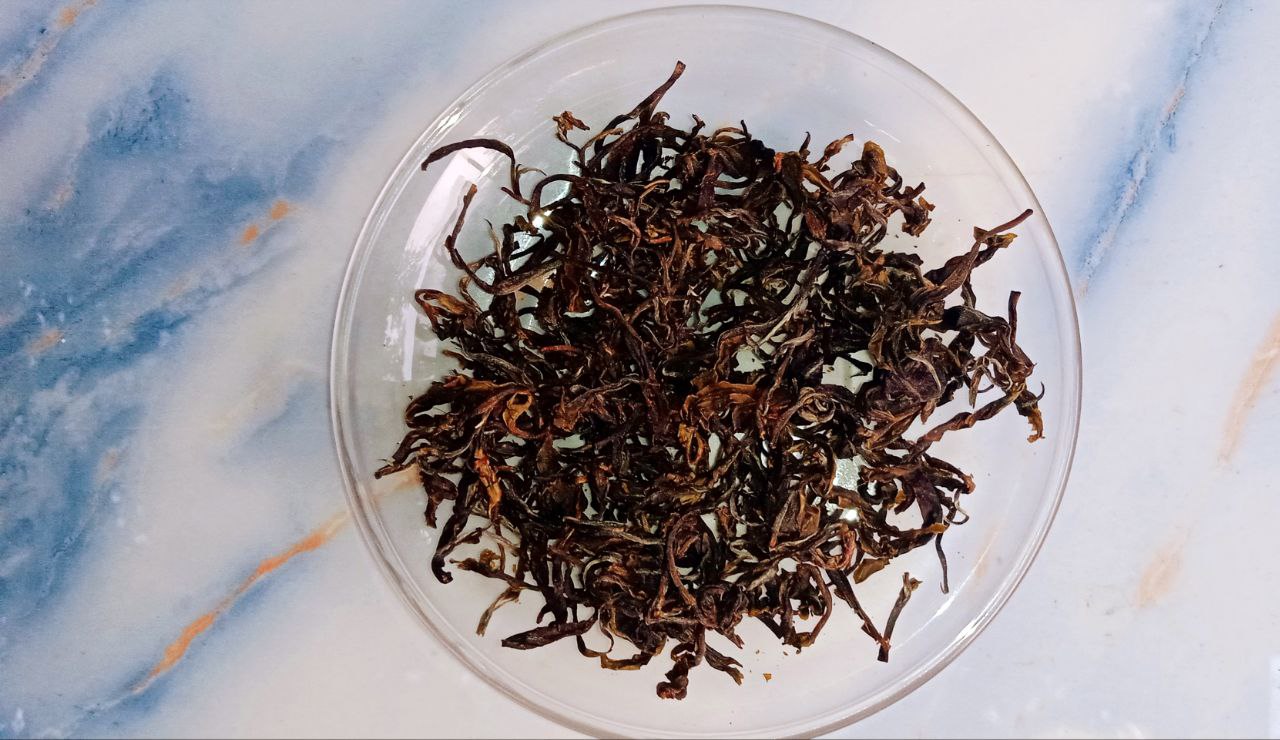
Yellow tea comes from China and isn’t as well-known as green, black, or oolong tea, even though it’s actually quite different. It takes a lot more effort to make, with extra steps that most teas don’t go through, and not many people know how to do it properly. The taste is smooth and a bit sweet, and it smells kind of like flowers, but in a way that’s not too strong. People who love tea and even those just trying it for fun might find yellow tea interesting because it’s simple on the outside but has a lot going on once you really pay attention.
From Garden to Cup: The Unique Processing of Yellow Tea
Yellow tea is made using a careful process that mixes parts of how green tea and white tea are made, but then adds an extra step called “sealed yellowing,” or men Huang. This step is what makes yellow tea different from the others. It’s not just about drying leaves or heating them—this sealed yellowing part means the tea leaves are lightly steamed and then wrapped up for a while so they slowly change color and flavor. This part takes skill and time, and it’s one of the reasons why yellow tea isn’t made in large amounts.
- Plucking – The youngest buds and leaves are picked by hand in early spring because they give the best flavor for making yellow tea.
- Withering – The leaves are laid out to wilt slightly, which allows some of the moisture to evaporate.
- Fixation (Kill-Green) – The leaves get heated up fast (in a pan or with steam) to stop them from changing flavor, same as with green tea.
- Sealed Yellowing – This important step involves wrapping the leaves in cloth or paper and leaving them in a humid place to oxidize a bit, which gives them their yellow color and smooth taste.
- Drying – The tea is then dried to keep the flavor and smell from fading.
Aroma and Taste Profile
Yellow tea has a smooth, sweet flavor with a hint of floral notes. Its smell can remind you of honeysuckle or chestnut, with a slight undertone of hay or baked goods. The taste is smoother and less grassy than green tea, with a soft texture and a light savory taste. The aftertaste is sweet and sticks around for a while without being too strong.
Types and Varieties of Yellow Tea
Yellow tea is mostly made in China, and some of the well-known kinds are
- Junshan Yinzhen – This tea is made only with buds and is considered one of China’s top ten teas.
- Meng Ding Huangya – It is grown in Sichuan and has a slightly sweet and nutty taste.
- Huoshan Huangya – From Anhui, this tea has a light floral flavor.
Classification According to Leaf Usage
Yellow Bud Tea
- Huoshan Huangya tea: Made mostly from buds and the first leaf, this tea is one of the highest-grade yellow teas.
- Junshan Yinzhen: This famous tea from Hunan province is mostly made from buds.
- Mengding Ganlu or Ganlu tea: Grown in Sichuan province, this tea has been around since the Tang Dynasty and is recognized for its sweet taste.
Small Leaf Yellow Tea
These teas are made from smaller first and second leaves combined with buds, which gives a mix of sweetness from the buds and a fuller flavor from the young leaves. Examples include Huang Xiao Cha, Mogan Huangya, and Huo Mountain Yellow Bud.
Large Leaf Yellow Tea
These teas are made from larger, more mature leaves that are picked later in the season, giving them a stronger taste and fuller body. Examples include Huang Da Cha, Guangdong Yellow Tea, and Da Ye Qing.
| Category | Tea Name | Origin | Leaf Type | Flavor Profile |
| Famous Varieties | Junshan Yinzhen | Hunan, China | Buds only | Delicate, subtle, highly prized |
| Meng Ding Huangya | Sichuan, China | Buds and small leaves | Slightly sweet, nutty | |
| Huoshan Huangya | Anhui, China | Buds and first leaf | Light, floral | |
| Yellow Bud Tea | Huoshan Huangya | Anhui, China | Buds and first leaf | Light, floral |
| Junshan Yinzhen | Hunan, China | Mostly buds | Subtle, elegant | |
| Mengding Ganlu (Ganlu) | Sichuan, China | Buds and small leaves | Sweet, mellow | |
| Small Leaf Yellow Tea | Huang Xiao Cha | China (specific region not stated) | Buds + first/second leaves | Sweet and full-bodied |
| Mogan Huangya | Zhejiang, China | Buds + small leaves | Rich, layered flavor | |
| Huo Mountain Yellow Bud | Anhui, China | Buds + young leaves | Balanced sweetness and body | |
| Large Leaf Yellow Tea | Huang Da Cha | Hunan, China | Mature large leaves | Strong, full-bodied |
| Guangdong Yellow Tea | Guangdong, China | Mature leaves | Bold, earthy flavor | |
| Da Ye Qing | Yunnan/Guangdong, China | Large, mature leaves | Robust and intense |
Yellow Tea in India
India, known for producing a lot of tea, is starting to explore yellow tea. Some estates in Assam, Darjeeling, and Nilgiris have begun experimenting with this rare type of tea. But since making yellow tea is complicated and not many people know about it, it remains a special and rare product in India.
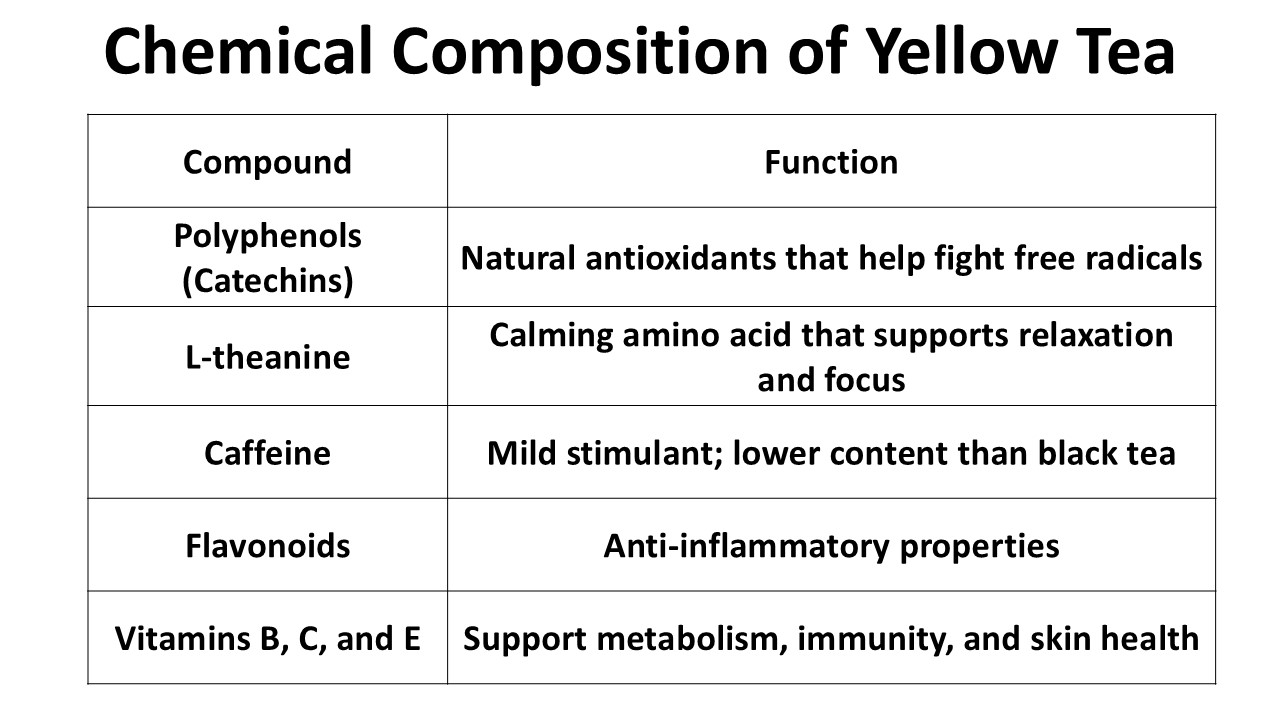
Chemical Composition of Yellow Tea
Preparation and Brewing Tips
To get the best out of yellow tea, treat it gently:
- Water Temperature: 75°C to 80°C (not boiling)
- Leaf Quantity: 1 teaspoon per 150ml water
- Steeping Time: 2–3 minutes (can be steeped 2–3 times)
- Vessel: Use glass or porcelain to observe the beautiful unfurling leaves.
Avoid over-steeping—it will mute its gentle character.
Can You Add Milk and Sugar?
No, yellow tea is meant to be drunk without milk or sugar. Adding them would hide its natural flavors and mess up its balance. If you usually like stronger teas with milk or sugar, yellow tea might not be the best choice for you.
Health Benefits
- Yellow tea has antioxidants that neutralize free radicals and prevent cell damage.
- Heart helper – Might keep cholesterol and blood pressure in check if they’re already normal.
- Yellow tea has low caffeine content, which does not cause any issues with digestion.
- Yellow tea helps with weight management and also supports an instant energy boost.
- Calm focus – Small caffeine + L-theanine = awake but chill (no jitters).
- Liver aid – Helps clean out junk naturally.
Medical Disclaimer: This article is for informational purposes only and not medical advice. Consult a healthcare professional before making dietary changes.
Conclusion
Yellow tea is more than just a type of tea—it’s made through a slow and careful method that keeps more of the natural stuff inside the leaves. It doesn’t taste too strong, and some people drink it not only because they like how it tastes or smells, but also because it might help with things like digestion, focus, or keeping energy up. It’s harder to find and not cheap, but that’s mostly because it takes longer to make. If you’ve only had green or black tea before, yellow tea could be something new to explore.
Tea Varieties – Click to Read More
| Tea Name | Read More |
| Junshan Yinzhen | Read More |
| Meng Ding Huangya | Read More |
| Huoshan Huangya | Read More |
| Yellow tea | Read More |

I’m Kanka Adhikary, a small tea grower from the picturesque Dooars region of India. With deep roots in tea cultivation, I share real-life experiences, traditions, and stories that reflect tea’s journey from leaf to cup.
I also hold a B.Sc. degree in Medical Physiology. Through this blog, I aim to bring you closer to the world of tea—its culture, craftsmanship, and the everyday life of those who grow it.